A Memory Called Empire
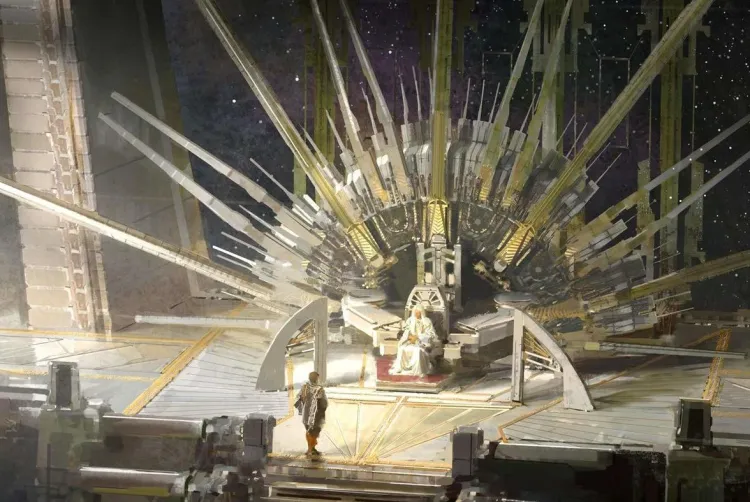
Mahit is broken, or so she thinks. A scratch can do a lot in this world. The World; The City: Teixcalaan.
A Memory Called Empire is a book following the events—and perspective—of Mahit, Ambassador to Teixcalaan from Lsel Station. A far-flung mining station which has found itself in the sights of an Empire. Sandwiched between predatory empire and prey states, her job is critical.
Most jobs on Lsel are critical. Stationers have developed a technology to assist: an imago. Remembering all the skills of all their late colleagues. Some generations old. Mahit has Yskandr. Mostly.
We are quickly on a ship named Ascension’s Red Harvest. This was a strange joy that I had throughout the series: the ship names. An epicness that blended well with the poetic nature of Teixcalaan.
The ship is Teixcalaanli; a new ambassador was requested by the Empire. Not out of place, aside from the recent lack of information surrounding Lsel’s current (previous?) ambassador, Yskandr (oh).
This is where we are injected into the culture of Teixcalaan—a smash of arts, duty, loyalty, and narrative—and its juxtaposition with Stationer culture, which is the same, but different. Two sides of the same, but different. Mahit, growing up in the former, preferring and learning the latter, is now fulfilling her dream of living in The City; The World. Living within the imperial core that is Teixcalaan. Swallowing culture and spreading its own. The center of it all.
Mahit finds friends, close ones, while investigating her predecessor. Teixcalaanli friends. This is where a lot of alienation themes start to develop: Mahit, as with any person, would like to be seen as such. Not a barbarian that happens to be smart. Not an exotic diplomat from Stationer space; sovereign but pressured by the weight of Teixcalaan. She wants, more than anything, to be Teixcalaanli, born Teixcalaanli, but knows that she could never be accepted.
Mahit, Three Seagrass, and company (the Teixcalaanli naming system is incredibly interesting, drawing from Arkady Martine’s expertise in Mesoamerican history) find themselves knee-deep in the political maneuverings of the Teixcalaanli elite. Trying to steer events in their (Lsel’s?) favor whenever possible. Typically not going as planned.
The political system of Teixcalaan is styled after Byzantine politics: ruthless and beyond calculating. The portrayal of this is presented in most of the political class of Teixcalaan.
The plot nicely drip-feeds information to get the mind racing. This was nice in a way I didn’t expect. I found myself guessing wrong about the motivations of a character more times than not, but realizing, only later, that this is how Mahit feels: misguided and still trying to pick up the pieces.
The slow burn finally picks up into more than just flirting. Unfortunate, considering the circumstances only, but sometimes it’s the troubles that bring us together, I suppose. An interesting theme that is: loss. This book covers it in more ways than one.
The end of the book nicely leaves a handle for the second of the duology. One that may open a door closer to home than Mahit may wish. Than Lsel may wish, along with its own political maneuverings and ambitions.